Profiles and panels
A monument’s profile is built from edges, recesses, projections, and changes of finish. The 1919 dealer’s handbook drawing labels raised and sunken panels, a surface margin line, a band for a monogram or emblem, and several mouldings. Those marks show how the face was organized before lettering or ornament was considered. (DM PDF p.11; printed p.8)
The panel and its margin
Section titled “The panel and its margin”A panel creates a bounded field within the larger face of a die or base. The handbook distinguishes raised and sunken panels and labels a surface margin line beside rock-face work. It records a period drawing vocabulary; it does not prescribe one panel shape or proportion for all stones. (DM PDF p.11; printed p.8)
Inscription composition is a separate question: the lettering section covers how a block of words fits within its field. Here the subject is the stone around that field: where a recess begins, how much border remains, and how the face changes at its edge. (LM PDF pp.99-107.)
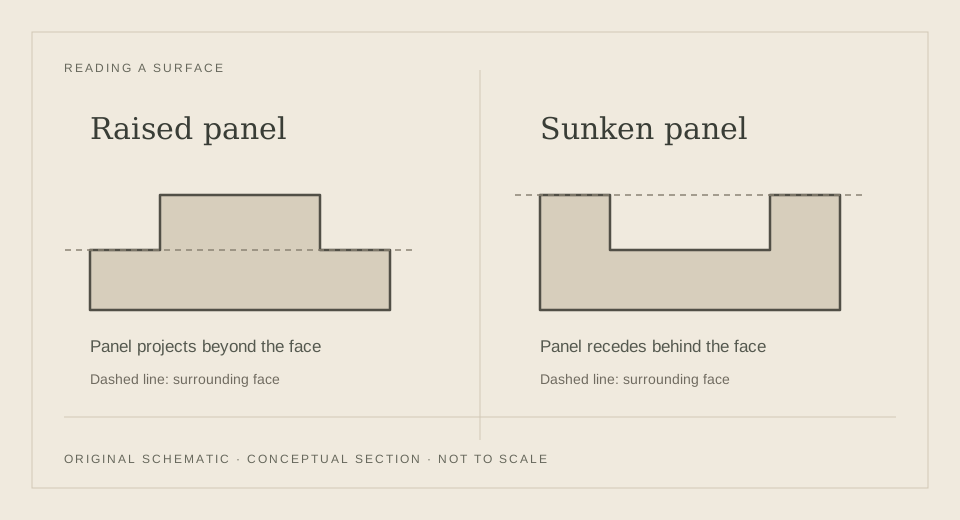
The same drawing labels forms such as bead, cyma, and ogee mouldings, along with grooves and a pediment. These profile names help distinguish a projecting edge from a recessed line. The page is a glossary and diagram rather than a modern construction standard. (DM PDF p.11; printed p.8)
Smooth and rough surfaces
Section titled “Smooth and rough surfaces”The handbook’s diagram places a smooth margin beside a rock-faced field. Later contributors debate whether that contrast looks deliberate or artificial, and whether rough treatment suits a particular form. Their disagreement is useful evidence of period design taste, not a current finish recommendation. See rock-faced work. (DM PDF pp.11, 122-125; printed pp.8, 120-122)
See also
Section titled “See also”Sources
Section titled “Sources”- DM PDF pp.11-12, 122-125; printed pp.8-9, 120-122.
- LM PDF pp.99-107.